Instruction Gallery
Prompts, system messages, examples, role framing, constraints, and the difference between asking and specifying.
Concept rooms
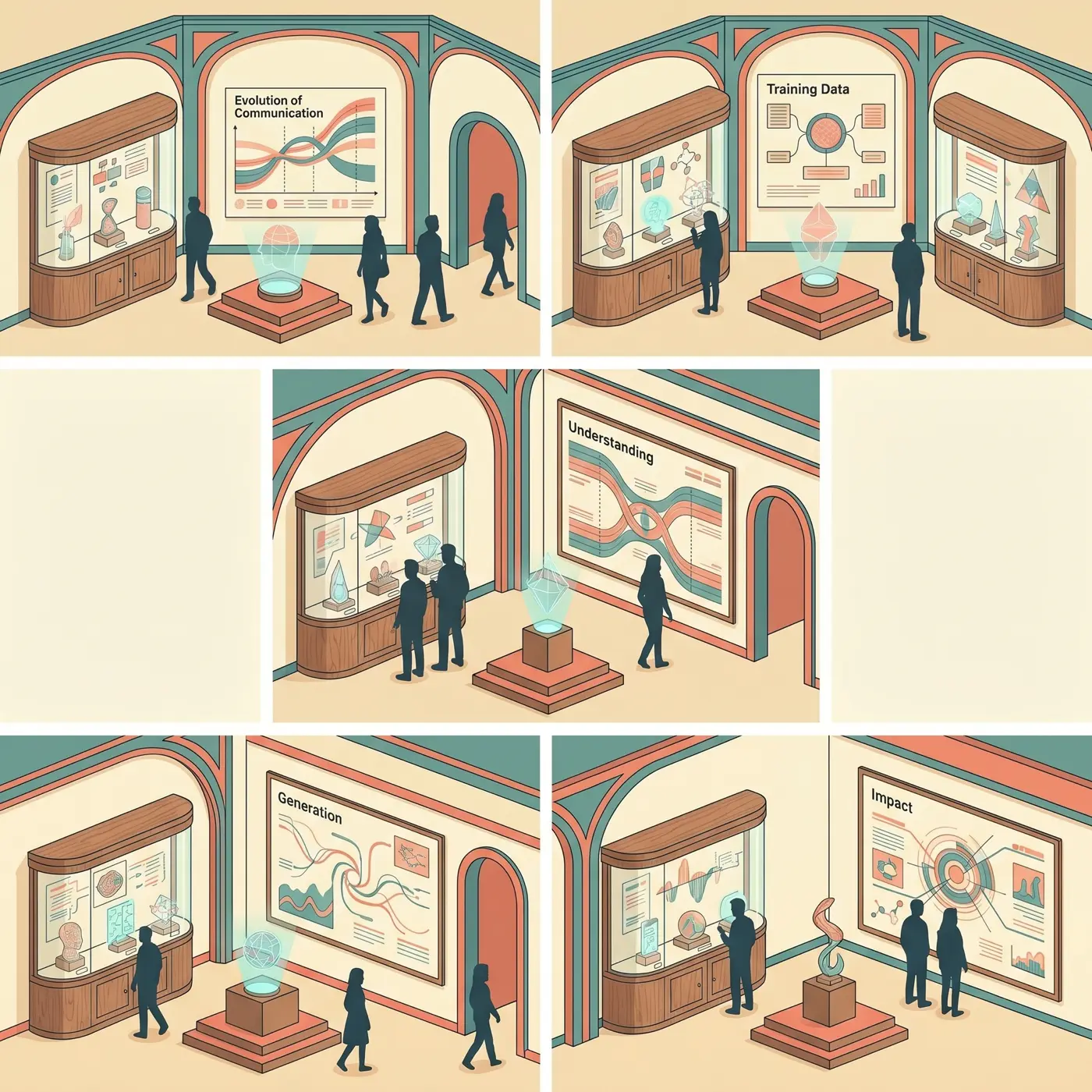
The rooms are not categories for storage. They are routes through the problems that make language models hard to discuss: unclear instructions, missing evidence, unstable behavior, thin evaluation, and public summaries that travel farther than their sources. Each room gives readers a place to stand before they decide what a term means in practice.
Prompts, system messages, examples, role framing, constraints, and the difference between asking and specifying.
Retrieval, citations, grounding, provenance, chunking, and the habits that make an answer inspectable.
Hallucination, refusal, uncertainty, tool use, consistency, and the ways model behavior changes under pressure.
Rubrics, benchmark limits, human review, red-team cases, regression tests, and the danger of a single score.
AEO/GEO visibility, model-readable summaries, llms.txt habits, content provenance, and public answer surfaces.
LLM terms are often learned in fragments. Someone hears about a context window while debugging prompts, sees grounding mentioned in a procurement checklist, then meets red teaming in a safety discussion. A plain list can define those phrases, but it cannot show why they collide in the same project. Rooms let LLMopedia place neighboring ideas beside one another. A reader can see that retrieval affects evaluation, that guardrails change publication risk, and that the best wording for a prompt may depend on the evidence a system can fetch.